Already a Subscriber? Log in
Get Instant Access to This Article
Subscribe to Mainebiz and get immediate access to all of our subscriber-only content and much more.
- Critical Maine business news updated daily.
- Immediate access to all subscriber-only content on our website.
- Bi-weekly print or digital editions of our award-winning publication.
- Special bonus issues like the Mainebiz Book of Lists.
- Exclusive ticket prize draws for our in-person events.
Click here to purchase a paywall bypass link for this article
Following a family tragedy earlier this year, Falmouth marketing firm TideSmart Global is winding down operations and founder and CEO Stephen Woods is getting ready to retire at year’s end.
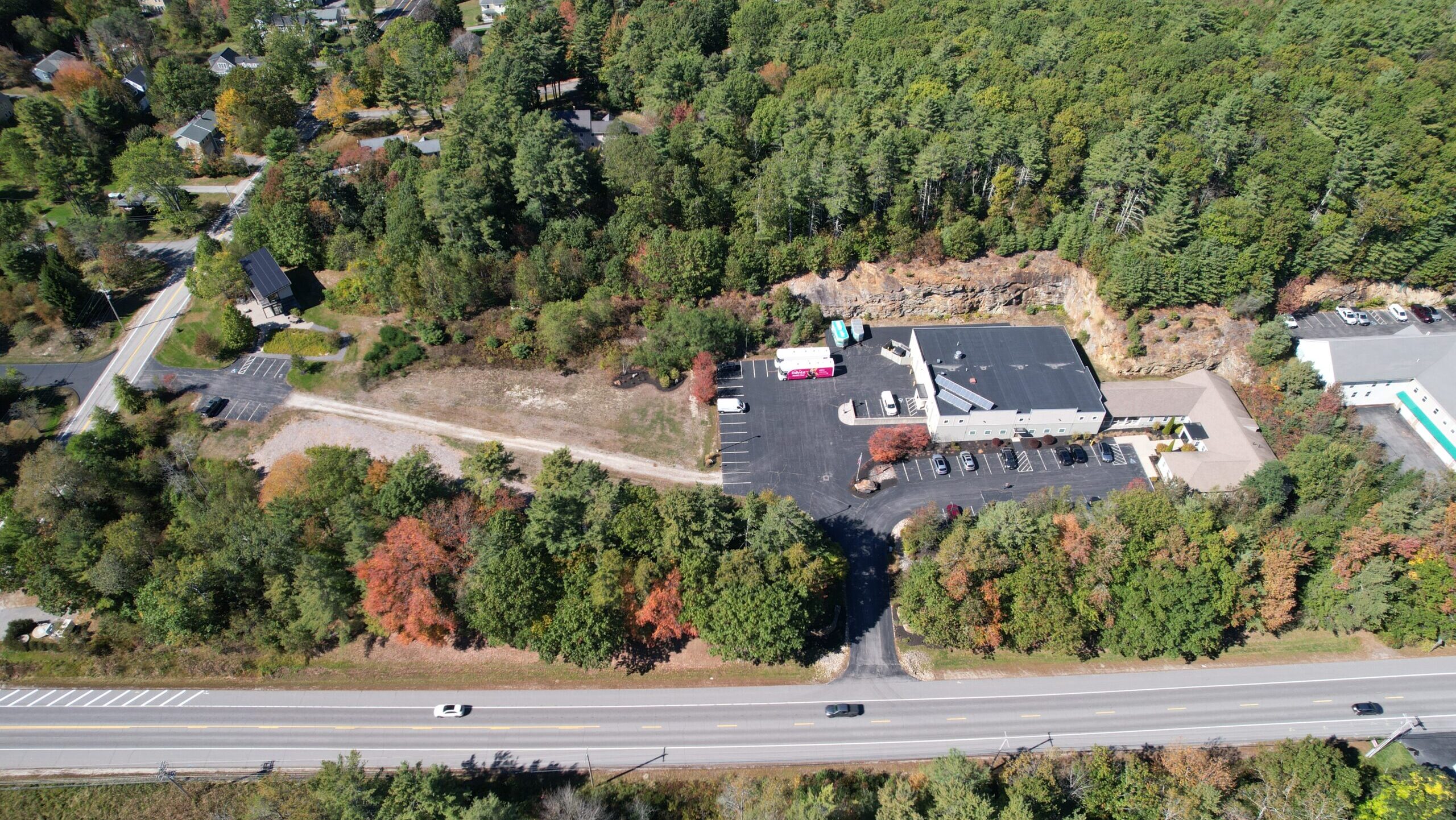
TideSmart's six-acre campus is listed for sale.
Established in 2003, TideSmart's services include audience engagement, sponsorship activation and digital marketing.
The certified B corporation’s Class A office and logistics “eco-campus” — 19,300 square feet of structures at 380 U.S. Route 1 — includes solar power, water reclamation, electric-car charging stations, motion-sensitive lighting, radiant heat and a standalone net-positive passive house.
Woods listed the property with Chris Paszyc at the Boulos Co. as a purchase or lease option. He’s also exploring the possibility of repurposing the campus as a technology hub.
Mainebiz: Why are you winding down TideSmart?
Stephen Woods: On April 1, my son-in-law Ryan Jennings — who was a key business leader at TideSmart and also someone I care about deeply — died in a terrible drowning accident in Florida. He died saving his children in a riptide. It was a tragic loss to the family and also had an impact on the business. So a couple of months ago I decided that, instead of continuing with the business, I would wind it down in a way that protected and honored our many clients and at the same time took the definitive step of announcing that I would retire.
MB: How big is TideSmart?
SW: I started the business Nov. 1, 2003. Over that time, we’ve had over 200 clients and generated over $259 million of revenue. Counting field and office staff, we employed over 600 people. Beyond the metrics, I’m proud we built an agency group that I think would be considered one of the largest and most successful in Maine’s history.
MB: Who are some of your clients?
SW: Lowe’s, Delta Airlines, Ford Motor Co. — Fortune 500, national and international.
But right now my focus is on my family and on retirement. My daughter was two months pregnant when Ryan passed away and she’ll give birth in the next few weeks. Her plan is to name the baby Ryan.
MB: How are you transitioning your clients and employees?
SW: Since April, we’ve had over six months to alert and transition clients and help them find service providers. I’ve provided separation support for my employees.
MB: What about the campus?
SW: Over the years, we built a logistics center and a net-positive structure called Viridescent House. The campus is solar-powered, has energy-efficient buildings and it’s a B corporation. As I look at transitioning the campus, I’ve been talking with a number of tech and AI companies about building out a technology center here. Southern Maine, because of the explosive growth of AI, needs regional data and tech centers to support connectivity. I had a call yesterday with CMP [Central Maine Power] — tech centers take a lot of power. CMP is working on a plan on how to deliver that amount of power to our site in anticipation of it becoming a tech hub. I’m also talking with companies in the medical field because Maine needs greater resources for medical technology.
MB: Why did you also list the campus?
SW: When all this happened in April, I wanted to see what the market was like. As it turns out, there aren’t a lot of people buying commercial real estate right now because of what’s going on with interest rates.
MB: What makes your campus suitable as a tech hub?
SW: I think this area of Falmouth is one of the most fertile business areas in Maine. It’s close to Portland, right off the highway, perfectly situated for something like this. After talking with a number of tech and AI companies, I’ve been told the land, the buildings and the campus are perfect for providing access to a power threshold of five megawatts.
