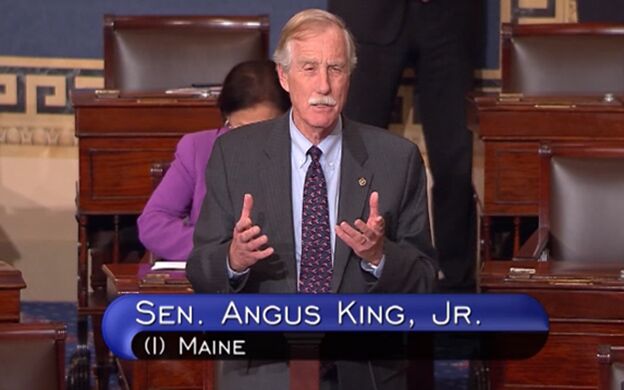
U.S. Sens. Angus King, I-ME and John Curtis, R-Utah, are introducing bipartisan legislation to help homebuilders reduce costs and avoid bureaucracy as they work to address the national housing shortage.
The bill is the “Build American Efficiency Act,” which is also being sponsored by U.S. Sens. Lisa Murkowski, R-Alaska, and Peter Welch, D-Vt., and is designed to encourage the Department of Housing and Urban Development to share industry-led initiatives to certify products and facilities that comply with Build American Efficiency Act requirements.
“Despite our country’s desperate need for additional affordable housing options, American homebuilders face steep costs and bureaucratic red tape,” said King.
The Build American Efficiency Act was designed to streamline the process for builders to locate domestically sourced materials.
It would ease the restrictions of the Build America, Buy American law, which has been blamed for stalling building projects and driving up costs.
“The Build American Efficiency Act would empower the Department of Housing and Urban Development to share information to help builders, manufacturers, and housing providers navigate complicated compliance requirements and identify verified American-made products,” King said.
“Eliminating this time-consuming and costly additional step for homebuilders will allow them to build more homes faster. It’s a three-page bill that amounts to a common-sense helping hand.”
Maine supporters
In Maine, the Senate bill is supported by Avesta Housing and Evernorth.

“The Build American Efficiency Act is an important step forward that will help Avesta and creators of affordable housing everywhere, move ahead with creating desperately needed new homes for individuals and families,” noted Jennifer Hawkins, president and CEO of Avesta Housing.
“This bill removes a significant challenge to building housing that is now causing serious delays, increasing costs of construction, and putting the viability of needed developments at risk,” Hawkins added.
The bill has been supported by dozens of manufacturers, housing coalitions and contractors’ associations, including the Alliance for American Manufacturing, Associated General Contractors, the National Association of Manufacturers, the National Association of Realtors and the National Association of State Housing Agencies.

