Already a Subscriber? Log in
Get Instant Access to This Article
Subscribe to Mainebiz and get immediate access to all of our subscriber-only content and much more.
- Critical Maine business news updated daily.
- Immediate access to all subscriber-only content on our website.
- Bi-weekly print or digital editions of our award-winning publication.
- Special bonus issues like the Mainebiz Book of Lists.
- Exclusive ticket prize draws for our in-person events.
Click here to purchase a paywall bypass link for this article
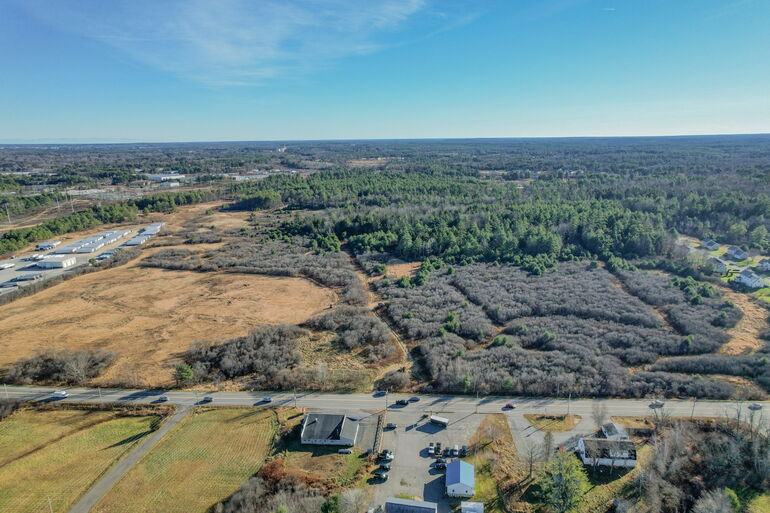
A neighborhood coalition has filed an appeal in Cumberland County Superior Court to the Gorham Planning Board’s Sept. 14 sanctioning of Amazon’s proposed 146,000-square-foot distribution center.
Gorham United says the project’s increased traffic — estimated to amount to an additional 3,000 vehicles per day, seven days a week, along Main Street/Route 25 — will threaten public safety and cause significant congestion along corridors that are already overburdened.
“The group contends the project was approved without a concrete plan to address or mitigate those significant traffic impacts," organizer Josh Trombley said in a press release.
The Amazon facility still needs approval from the Maine Department of Transportation, as well as from the Army Corps of Engineers. A third permit the project needs, from the Maine Department of Environmental Protection, came through Friday, Oct. 16.
In addition to traffic issues, the Gorham United filing cited concerns over wetlands and runoff on the proposed 94-acre site. The group argued that “the applicant failed to demonstrate that its proposed development would preserve wetlands and natural drainage areas to the maximum extent required by Gorham’s ordinances.”
In approving the project, the Maine Department of Environmental Protection cited no adverse impact on wetlands in the section of the Gorham Industrial Park where the facility is to be built.
Opposition has been ongoing
The project has faced opposition throughout the more than 10-month review process, particularly from neighbors, who have raised concerns about traffic and noise.
The developer, New York City-based Bluewater Property Group, has adjusted the proposal to mitigate the impact on neighbors, tweaking the location of the facility’s parking lot, lowering light poles and adding berms, higher fencing and significant plantings along the property line bordering neighboring Shamrock Drive.
Gorham United says the modifications don’t go far enough and do nothing to reduce traffic congestion.
“An industrial-sized trucking facility does not belong in the middle of a town village,” Trombley said.
Gorham had 19,239 residents in the July 2025 U.S. Census.
The court filing contends “the Planning Board abused its discretion in the manner in which the hearings were conducted, evidence was considered, and the application was ultimately decided.”
Town says process was thorough
Gorham’s director of Community Development, Thomas Poirier, told Mainebiz the town stands by its decision.
“The town stands behind the Planning Board’s decision and respects residents’ ability to seek judicial review. The Planning Board approached the Amazon application thoughtfully and took its responsibility to evaluate the proposal seriously," he said.
“Its review included technical submissions, town staff and consultant comments, and extensive public input, including concerns raised by neighbors and Gorham United,” Poirier added. “The review addressed issues and required revisions to the plan and other information for items such as vehicular and pedestrian traffic and site access, stormwater, wetlands, streams, light pollution, buffering, noise and public infrastructure.
“The town remains confident that the Planning Board’s decision reflects a thorough and thoughtful review of the application, the applicable ordinance standards, and the concerns expressed by the community. Because the approval is now the subject of litigation, the town will address the specific allegations through the court process.”
Petition also in the works
Members of the citizen group are also circulating a petition that calls for a 180-day moratorium, retroactive to Sept. 1, against “high-traffic industrial land use … where the planned operations are projected to generate more than 1,500 average daily vehicle trips.”
If the group gathers enough signatures, the moratorium could potentially come before voters in a special election.
