Already a Subscriber? Log in
Get Instant Access to This Article
Subscribe to Mainebiz and get immediate access to all of our subscriber-only content and much more.
- Critical Maine business news updated daily.
- Immediate access to all subscriber-only content on our website.
- Bi-weekly print or digital editions of our award-winning publication.
- Special bonus issues like the Mainebiz Book of Lists.
- Exclusive ticket prize draws for our in-person events.
Click here to purchase a paywall bypass link for this article
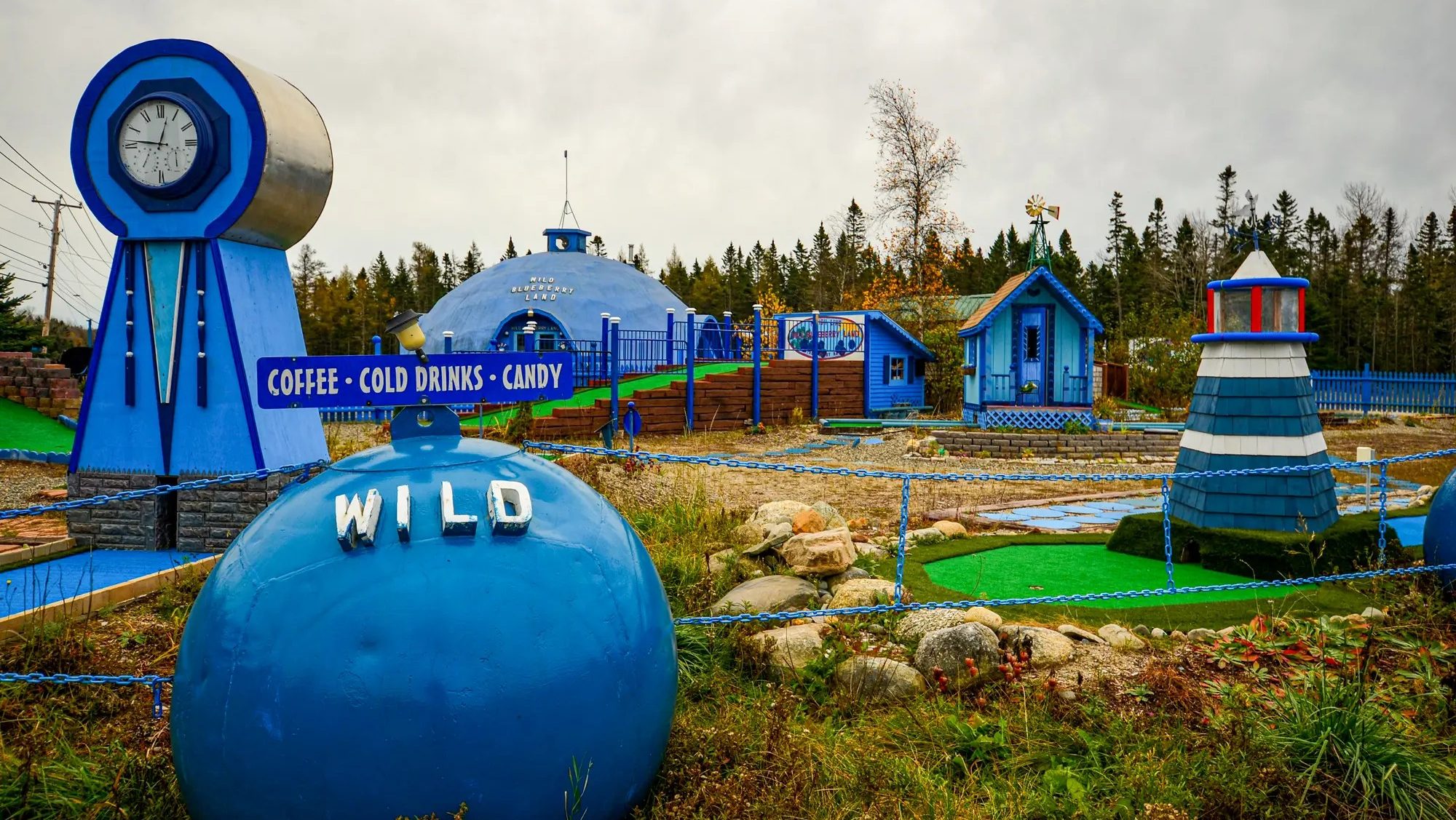
A pair of tombs in Eastport that desperately need repair and a roadside geodesic dome in the shape of a blueberry are among this year’s four most endangered historic places in Maine.
Maine Preservation, a nonprofit advocacy organization founded in 1972 and based in Brunswick, draws up the annual list of sites whose future is uncertain due to pressing threats. The list started in 1996.
“As we recognize four places that are facing significant repairs, uncertain futures and a call for demolition, we also want to raise the alarm about threats to the tools and professional pipeline that support Maine’s treasured historic resources,” said Tara Kelly, Maine Preservation’s executive director.
Sites previously listed and successfully rehabilitated include the Frances Perkins Homestead in Newcastle, Biddeford City Hall Clock Tower, Readfield Union Meeting House and Wood Island Life Saving Station in Kittery.
Several sites remain threatened, though may not be on this year's endangered list. One such example is the former studio and home of artist Robert Indiana, who died in 2018. His Vinalhaven base, a former Odd Fellows Hall known as Star of Hope Lodge, was recently put up for sale, drawing concerns for the future of the site, Maine Preservation said.
Historic tombs
In Eastport, the 19th-century Masonic Tomb and Shackford, Hayden and Kilby Tomb are the city's only historic burial tombs. Built for the local Masonic lodge and three prominent Eastport families, the convex and concave mansard roofs stand out from Hillside Cemetery’s landscape and top the city’s oldest extant brick structures.
Hillside Cemetery is owned by the city. Following decades of deferred maintenance, the tombs and retaining walls have significantly deteriorated and are perceived as a risk to public safety. The city installed an earthen mound in front of it in an attempt to secure it from collapse. But there are neither the available resources nor the capacity to repair and maintain the tombs.
The Tides Institute & Museum of Art retained restoration mason David Leeman of Knox Masonry to examine the tombs and retaining walls. He concluded that cracks had developed in the brick construction of the interior of two tombs. The walls connecting and flanking both would need to be rebuilt or significantly repaired. In all, repairs could cost as much as $150,000.
Wild Blueberry Land
In Columbia Falls, Dell and Marie Emerson built a 26-foot-tall blueberry and opened Wild Blueberry Land in 2001.
They had always sold blueberries from their nearby Wild Wescogus Berries farm. When a hotel and restaurant shuttered just up the road on U.S. Route 1, they jumped at the opportunity for prime commercial real estate and hatched a plan to build a giant blueberry. The finished dome measured 50 feet in diameter.
A Washington County museum shares the history of wild blueberries, from the controlled burns managed by the Passamaquoddy to the canning of blueberries to nourish Union soldiers in the Civil War. In 2016, the Emersons helped found the nonprofit Wild Blueberry Heritage Center to transition management of the site and further the mission of sharing the history of wild blueberries.
The geodesic dome is structurally sound, but the concern is with a transition in stewardship. The Wild Blueberry Heritage Center board recently voted to dissolve the organization, which had been integral to expanding on-site interpretation and educational programming as well as the property’s overall management. The nonprofit’s remaining funds were granted to the Passamaquoddy Nation to support the opening of museums in Sipayik and Motahkomikuk.
It's an hour's drive past Acadia National Park and is only open seasonally, meaning margins are tight. The Emersons reported they have experienced a decline in tourism to their part of Washington County.
The goal is to pass their work to the next generation.
Swanton-Deering House
In Bath, the Swanton-Deering House is an 1839 Greek Revival-style house at 606 Washington St., across the street from Bath Iron Works. Owners of the house include those connected to local maritime industries.
BIW purchased the property in 1982 and transitioned the house for use as an office and now leases it to a contractor connected with the shipyard. Now the property is on the block for demolition as part of the shipyard’s recent Washington Street Corridor project to provide parking for the company’s nearly 7,000 employees and to build a new facility.
The project is funded in part by the U.S. Navy, which means the project must undergo a review to identify cultural resources potentially impacted by the project, assess the level of impacts and devise mitigation measures. The public process is part of the National Historic Preservation Act.
In August, BIW marketed the Deering-Swanton House and another residential property for $1 on the condition that the buyer relocate structures by Nov. 20, 2027.
Handley Hall
In Augusta, Handley Hall is a five-story Renaissance Revival-style building completed in 1899 for the headquarters of the Kennebec Journal and now home to the University of Maine at Augusta’s architecture program. In November 2025, the University of Maine System proposed relocating the program. While the proposal to move the program has been paused, it raises questions about the building's future as well as that of the architecture program.
