As a longtime staff member and recently appointed executive director of Portland-based Shalom House, Abigail Spadone has witnessed firsthand the transformational impacts that nonprofits can have on Maine residents.

“I have seen clients who come to Shalom House isolated, have little to no outside support and are really struggling,” Spadone says.
But with the Portland-based nonprofit’s support, those same clients form social connections, secure jobs and take control of their medication options, among other milestones.
Spadone says that these achievements form the backbone of recovery, which she describes as “not one particular outcome, but … having the opportunity to make choices about your own life with the support of people who care and a community that is willing to support you.”
Anxiety over leadership changes
For years, the nonprofits that provide these resources haven’t always found the same support. The cracks show up not just in the workforce that forms the foundation of these organizations, but also at the director level, which for more than a decade has experienced high turnover and scrambling transitions.
According to Third Sector New England, a Boston-based nonprofit providing leadership and management resources, “an anticipated wave of leadership changes” and general anxiety among nonprofit leaders have persisted since the organization published its first “Leadership New England” survey in 2014.
In Third Sector’s most recent edition of the survey, which uses data gathered from 2024-25, participating nonprofit leaders indicated that these challenges pose particular barriers to BIPOC-led and serving organizations.
In 2024, the Maine Association of Nonprofits noted state-specific difficulties in this area, with the “Great Resignation” intensifying the issue.
While this trend that swept throughout the broader workforce has since concluded, Jennifer Hutchins, executive director of MANP, says that chronic underinvestment in the sector, federal funding cuts or pauses, and Maine’s aging population continue to drive leadership turnover.
“Our region, especially Maine, has always been identified as (having) one of the oldest (demographics) in the nation, or among them,” Hutchins says. “So, we just know that from an economics perspective, our state is challenged by an aging population.”
Meanwhile, federal policy changes, cuts or pauses on previously reliable funding sources, and a volatile political environment place new and increasing stress on nonprofits and their leaders.
Leadership changes in Maine
In the past year, Maine’s newest nonprofit leaders represent a broad range of professional backgrounds: Some bring years of experience with out-of-state or national work at for-profit companies, while others have long histories with the nonprofits that they now lead.
Mainebiz spoke with several of these new nonprofit leaders about their organizational vision, challenges and opportunities facing nonprofits, and how to effectively lead in a sector marked by consistent change at the executive level.
Seasoned leader at Natural Resources Council of Maine

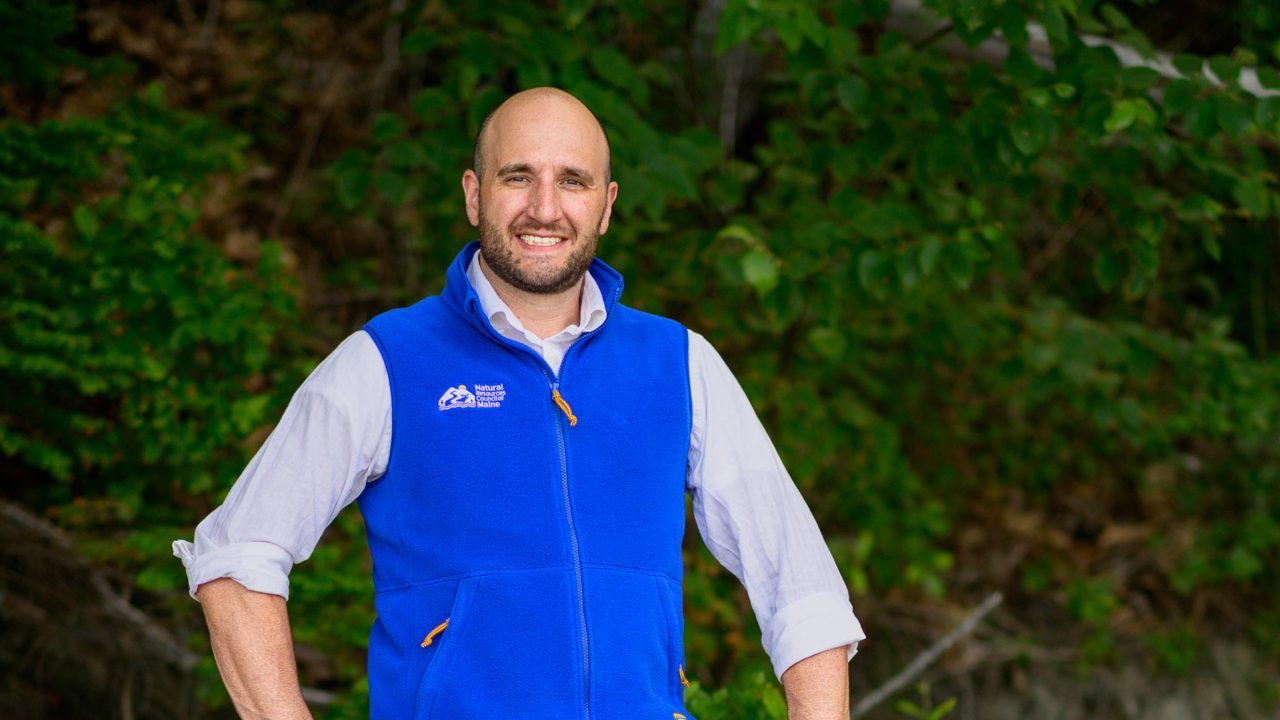
Justin Strasburger stepped into the executive director role at the Natural Resources Council of Maine last April, but he’s no stranger to nonprofit leadership, bringing nearly two decades of this experience to the role.
Not all of this work has centered on the environment: Strasburger most recently served as the executive director of Full Plates Full Potential, an organization focused on ending childhood food insecurity.
But in a state like Maine, nature and the outdoors intersect with all aspects of life, he said.
Though most Mainers appreciate the state’s natural beauty, Strasburger says, environmental and industry needs are often viewed as at odds with one another. But Strasburger sees this relationship as symbiotic.
“Everything from tourism to logging and fisheries, all those industries are all intricately related to our environment,” Strasburger said. “If we are not able to protect that environment and be good stewards of that environment, it puts all of that at risk.”
Environmental leaders can also benefit their organizations and continue to protect the state’s natural resources when they see the value of collaborating across industries, Strasburger noted.
“We want to be seen as being part of that solution,” Strasburger says, “not just a group saying no to growth … It’s not a zero-sum game to either take care of the environment or ensure we have enough housing or … a forestry industry in this state.”
At Community Housing of Maine, leadership includes ‘mutual respect’
When Community Housing of Maine named Kyra Walker as its new executive director in May, she was already a familiar face to most of the team, despite leaving the organization in 2024.

Walker worked with the Portland nonprofit from 2008 to 2024 before leaving to work as an independent consultant. That move was ultimately just a hiatus.
This familiarity has made for a smooth transition, Walker says.
“For me and the team, there was already an established mutual respect,” she noted. “All of the team that I work with now, I worked with before, and I feel really fortunate.
“My perception is that there is some comfort for them as well,” Walker added. “A leadership transition can feel like the unknown is in front of you.”
Walker is now leading her team in efforts to strengthen and transform the organization.
CHOM has never had a formal board recruitment process, for instance, which Walker wants to change. With some longtime board members poised to depart, this developing roadmap will help the nonprofit recruit and onboard members while meeting diversity goals.
“That can be all the way from age and geographic location in the state … as well as racial diversity,” Walker said
Ogunquit museum brings worldly view
As a relative newcomer to the nonprofit world, David Cunningham, executive director of the Ogunquit Museum of Art, says that he was struck by the amount of responsibility leaders carry within the infrastructure and funding common in the for-profit world.
“As a leader, you’re responsible to your staff, your board, your donors and the community you serve, and all of those groups quite reasonably have high expectations,” said Cunningham, who joined the museum in March after three decades in for-profit management. This experience spanned fashion, media and sports, and extended geographically throughout London, Paris and New York City.
“At the same time, you’re working with limited resources and a financial model that can be difficult to project because so much depends on philanthropy and external factors you can’t control,” Cunningham says. “You’re constantly trying to make the most of what you have.”
Part of that work includes developing and strengthening resources that are free to the community, such as OMAA Conversation programming, art classes, and free admission and bus transportation for school groups visiting the museum.
Combined with efforts to support staff and the museum’s aging infrastructure, the executive director role involves complicated decisions about what to prioritize, Cunningham says.
“I don’t think the answer is to lower expectations,” he noted. “The work is too important. But we do need to be realistic about what it takes to do the work well and invest in the people and infrastructure that make it possible.”
E2Tech hires leader with broad skill set
Prior to becoming executive director of E2Tech in November 2025, Orion Breen worked on subjects ranging from housing, energy, transportation and media.
So, Breen jumped at the opportunity to simultaneously address these areas through E2Tech, which supports growth in the green economy.
Working with just two full-time employees, a volunteer board and part-time human resources help, Breen has quickly come to see the value of business partnerships in the nonprofit sector.
The state’s business community often shows up strong when it comes to supporting nonprofits, Breen says, but has a tendency to stay quiet about these deeds. But Breen says that businesses should amplify their work with nonprofits, among the public and internally.
“I think that is more impactful to leverage your human capital, not just your monetary capital, when it comes to engaging the community, engaging with nonprofits,” Breen says.
Breen also highlighted the role of volunteers in the nonprofit sector and said that, by getting to know their employees, businesses can identify non-monetary ways to support their communities and nonprofits.
“Everybody has something to give, and if you deny people the opportunity to give to you, you’re denying a special experience,” Breen says. “It’s a gift, in a way, to let somebody give to you.”
Heart of Maine United Way successor is well prepared
When longtime Heart of Maine United Way president and CEO Shirar Patterson left the Bangor-based nonprofit, her successor, Matt Donahue, felt well-prepared to strengthen the organization’s community initiatives.
“Having been an internal hire, someone who was promoted from within, has made a huge difference,” says Donahue, who was named to the executive position in March after serving as HOME’s vice president and chief impact officer. He also extends credit to Patterson for leaving the nonprofit in a strong position.
But many nonprofits don’t have a stable foundation and transition plan when they need a new leader, he acknowledged. And growing pains that come with leadership transitions are now intensified, “especially as the fundraising landscape has changed,” Donahue said.
“Federal grants that have for a long time been a staple of the organization have now been paused or are in jeopardy, taken away,” he says.
Familiar issues, such as burnout and general underinvestment, also continue to challenge the sector.
“When we think of organizations that have to fundraise, that have to rely on community support to be able to function, to pay their bills and do their programs, that can create a bit of a slog year over year,” Donahue says.
Shalom House leader brings continuity
Abigail Spadone, who was named executive director of Shalom House in May, also brings organizational familiarity, having previously served as clinical director for the Portland-based housing and community mental health nonprofit.
While that experience provides a leg-up, “the needs in our communities are enormous, funding is uncertain, the environment can be complicated, and there is often an expectation that nonprofits will somehow keep doing more with the same or fewer resources,” Spadone says.
In addition to forming outside partnerships, Spadone stressed the importance of working within the organization to build relationships and support for employees.
“Since stepping into this role, I have spent a lot of time learning from my colleagues and staff members,” Spadone says. “I know that I don’t have all the answers, and one of the most important things a leader can do is recognize what they don’t know and learn from the people around them.”
