Already a Subscriber? Log in
Get Instant Access to This Article
Subscribe to Mainebiz and get immediate access to all of our subscriber-only content and much more.
- Critical Maine business news updated daily.
- Immediate access to all subscriber-only content on our website.
- Bi-weekly print or digital editions of our award-winning publication.
- Special bonus issues like the Mainebiz Book of Lists.
- Exclusive ticket prize draws for our in-person events.
Click here to purchase a paywall bypass link for this article
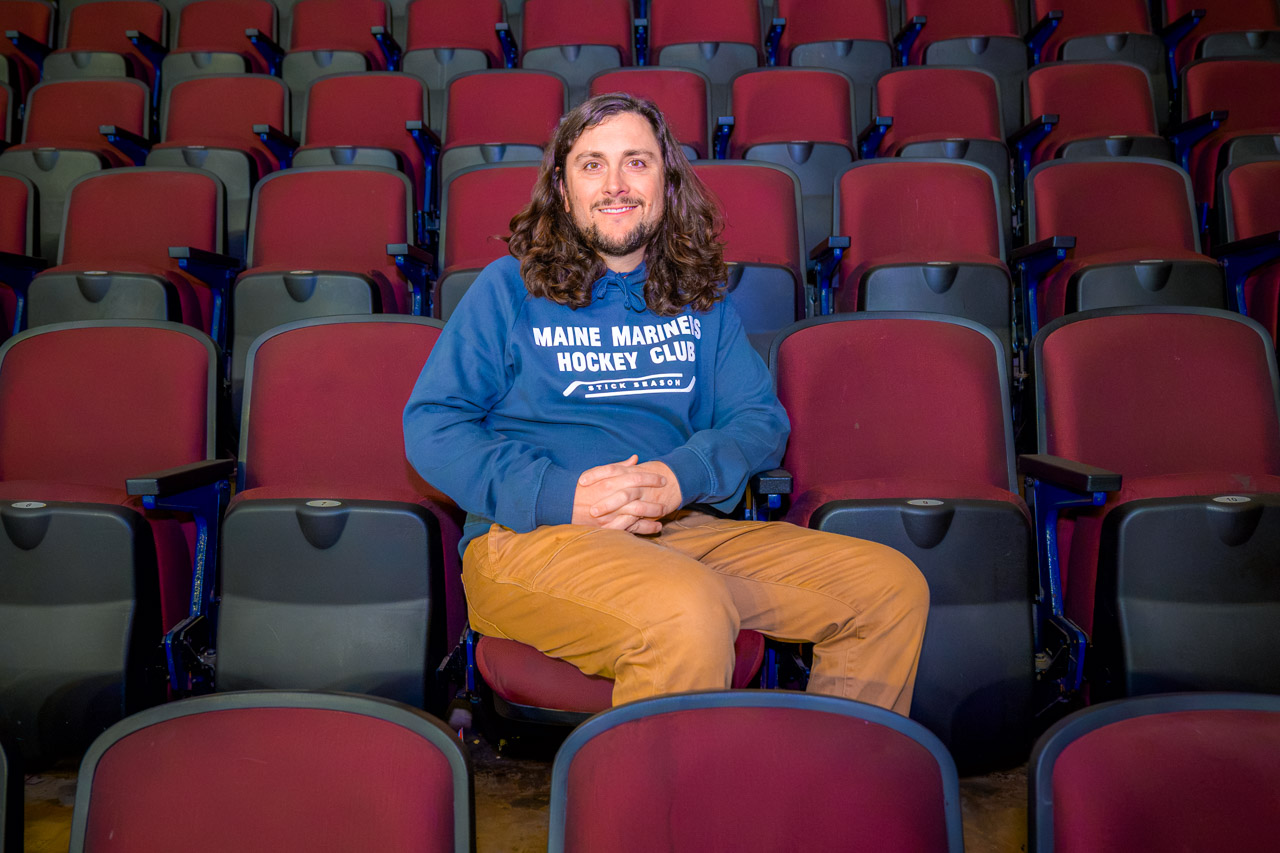
Burke Cherrie, a sports branding expert who helped launch the Portland Hearts of Pine men’s soccer squad in 2023, now leads the Maine Mariners as CEO. Just ahead of the hockey season that started in October, Mainebiz sat down with the Reading, Pa., native at the team’s new downtown Portland office, where boxes were still waiting to be unpacked. The Mariners play in the ECHL and are affiliated with the Boston Bruins of the NHL and the AHL’s Providence (R.I.) Bruins.
Mainebiz: How did you come into this role as a newcomer to sports team management?
Burke Cherrie: I have worked with tons of clubs and organizations across sports. My background is in sports media, so I’ve seen different models all the way up from NFL teams to global soccer teams down to working with lower divisions and minor league sports, college athletes, academies. I’ve seen different business models, and I think minor league sports is in a transitional period.
MB: What evolution have you observed?
BC: There was a ’90s/2000s model, and then social media came, and brand came in a very different way, and I’m uniquely positioned to look at that through a different lens. I’m not a typical CEO that would take this role, but I believe great clubs and sports teams are civic institutions and just a collection of amazing stories. That story influences how you develop partnerships and marketplaces and influences how you speak to your fans and your consumers.
MB: In your market research on the team, what challenges did you come across that you plan to tackle early on?
BC: From a hockey standpoint, Portland has seen two franchises leave [the original Maine Mariners, who played from 1977 to 1992, and the Portland Pirates, who played from 1993-2016]. That’s heartbreaking for fans. I heard a lot of horror stories about the Pirates leaving, and we need to rebuild trust with fans. Secondly, Maine has changed a lot — a lot of people are not from here, but they’re fiercely proud to live here. We need to create real intimacy between the communities around Maine and the experience of hockey.
MB: How do you aim to achieve that?
BC: Getting away from Sonic the Hedgehog Night and Marvel Movie Night and really making it about the working waterfront, local hockey — things that matter most to the people of Maine. People are really proud of this state, and we need to be a reflection of that in the form of hockey. When you talk to all the businesses on the working waterfront, they’re having their Christmas parties at our games already, but how do we go a layer deeper to tell their stories to fans? My playbook is storytelling and the community.
MB: How competitive is the market for sponsorships?
BC: In markets like Portland, local brands have gotten really savvy, with a shift away from sponsorships to partnerships. We want to get away from logo slaps and have deeply purposeful relationships with brands. We want to go deeper, not wider.
MB: Any new approaches to ticket pricing you’re exploring?
BC: We’re exploring tiers of dynamic pricing, recognizing that there is more demand for Saturday games as an example. I would rather have a lot more tickets sold on a Wednesday night at a lower price point and fill that house than hold the same pricing as a Saturday.
MB: And what about expenses?
BC: In the league, hockey operations expenses were up over 32% last year, and everyone’s dealing with that. Broken sticks, compensation and other costs are all a challenge. We’re trying to hold the line, and I think that’s where the arena does a really great job of trying not to pass that on to the consumer. We just need to have the opportunity to increase attendance, increase our partnerships and drive revenue in different ways. That doesn’t have to come with a price hike that the consumer sees. We’re really trying to hold the line on that.
