Already a Subscriber? Log in
Get Instant Access to This Article
Subscribe to Mainebiz and get immediate access to all of our subscriber-only content and much more.
- Critical Maine business news updated daily.
- Immediate access to all subscriber-only content on our website.
- Bi-weekly print or digital editions of our award-winning publication.
- Special bonus issues like the Mainebiz Book of Lists.
- Exclusive ticket prize draws for our in-person events.
Click here to purchase a paywall bypass link for this article
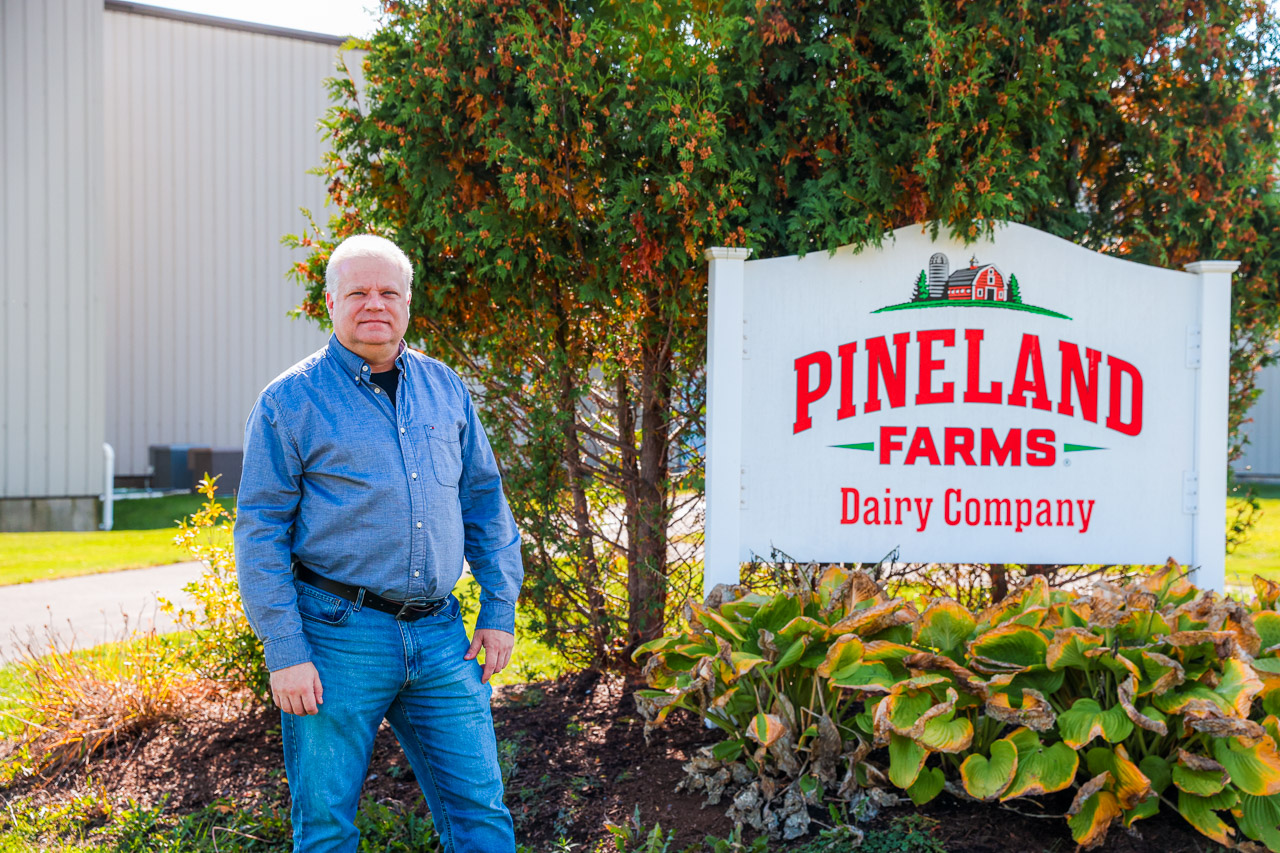
Over the years, a maker of Hispanic cheeses in Perth Amboy, N.J., has expanded throughout the U.S., Caribbean, Central and South America and Europe.This year, Tropical Cheese Industries LLC continued its growth with the acquisition of Bangor cheese-making company Pineland Farms Dairy Co. Inc.
“We fell in love with it,” says Victor Mehren, Tropical’s president and CEO. “It’s a fantastic building with great infrastructure for cheese-making. It has a great team already in place. And it’s a great dairy ecosystem.”
The New Jersey cheese maker is one of a cluster of out-of-state companies expanding to Greater Bangor over the past year. TurbineOne of Virginia recently opened a defense technology innovation hub in Old Town. R Cubed Engineering LLC, a Palmetto, Fla., engineering firm, plans to open an “innovation division” in Bangor. And Seattle-based Amazon (NYSE:AMZN) is building a last-mile distribution center in Hermon.
Less hassle
Greater Bangor is viewed as a region that offers modern conveniences without the hassle of larger metropolitan areas.
“I think people are starting to realize that,” says Peter DelGreco, president and CEO of Maine & Co., a Portland-based consultant for business relocation or expansion.
Two of the four Greater Bangor projects have a defense component.
“Right now, the hot term is ‘dual use’ — technologies that can have both military and civilian use,” says DelGreco. “We have a lot of defense-related projects and dual-use technologies in our pipeline.”
Greater Bangor is becoming something of a hub for companies looking to expand, attracted to perks such as a new YMCA, concerts and events, higher-education opportunities and access at Bangor International Airport.
There are always a few out-of-state companies that have their eye on the region.
“It feels like there’s good stuff happening in Bangor, professionally and civically,” DelGreco says.
New Jersey cheese maker
Tropical Cheese acquired Pineland’s Bangor manufacturing facility and assets earlier this year, to become Tropical’s second cheese manufacturing location, retaining the Pineland name.
“The facility provides an important foundation for our future growth,” says Mehren. “Bangor brings together an experienced workforce, strong connections to Maine’s dairy community and the infrastructure and room to expand production over time.”
The acquisition provides continuity plus opportunity for the operation and team, says Mark Whitney, Pineland’s longtime president, who is staying as general manager.
“Tropical kept the existing Bangor team in place and has been very clear that they see the people here as a core part of the investment,” says Whitney. “We’re continuing to operate the facility while beginning to bring Tropical products into Bangor, and over time the plan is to significantly expand production here. For the team, that means stability today and a much larger growth opportunity ahead.”
With Bangor expansion,Tropical brings an established cheese business and strong customer base into Maine.
“As production grows, we expect to use more milk from the Maine dairy system and grow the Bangor workforce,” Whitney says. “That is good for the plant, good for local employment and good for the broader dairy economy in Maine.”
Founded in 1982, Tropical offers Hispanic cheese, meat and other food products.
Pineland Farms Dairy Co. was established in 2017 by the Portland-based Libra Foundation.
Building relationships
Tropical intends to continue building on the facility’s longstanding relationships with Maine’s dairy community as production grows and to increase its Bangor workforce over time as investment and production at the facility increase.
Carollynn Lear, Bangor’s city manager, says the Queen City is ideal for Tropical, thanks to area universities, skilled workforce, an international airport and a culture, arts and entertainment scene.
Ashley Pringle, senior vice president of operations for Maine & Co., says the organization would support Tropical’s expansion as part of a broader vision for building and growing Maine’s food businesses.
“Having this well-known brand be in a position to source Maine dairy and to help grow our existing small agricultural businesses is truly a win-win,” says Mike Duguay, commissioner of the Maine Department of Economic and Community Development.
The acquisition was perfect timing as Tropical pursues an aggressive growth strategy, says Mehren: “We’re close to realizing capacity constraints in New Jersey.”
With the acquisition, “Job One is continuity,” Mehren says. Over the coming months, Tropical will introduce its own cheese-making process in phases, including a significant investment into infrastructure needed to produce Hispanic cheeses, which are typically softer than aged hard cheeses. Hispanic varieties are growing in popularity, along with Latino foods in general, he says: “A lot of consumers are looking for Hispanic foods on a more consistent basis — not just Hispanic consumers but general-market consumers. Cheese is one of those ingredients.”
Mehren credits Maine & Co. with facilitating the expansion.
“As an out-of-state company, we didn’t have the relationships needed to navigate establishing and growing a new business in Maine,” he says. “They connected us with the city of Bangor, state and local agencies, consultants and service providers. It made things a lot easier and more efficient.”
Drone intel
A defense technology company headquartered in Chantilly, Va., opened a manufacturing facility, called T1 MachineWorks, at 18 Wing Drive in Old Town earlier this year, with the expectation of creating over 20 jobs in the next five years.
Engineers will develop defense technology with a focus on artificial intelligence and autonomy software along with 3D manufacturing, rapid prototyping and testing for aerial platforms and other frontline defense technology.
“We will collaborate with local manufacturing partners to iterate quickly,” says Ian Kalin, the company’s CEO.
Founded in 2021, TurbineOne selected Old Town for its proximity to the University of Maine and the region’s growing defense technology and advanced manufacturing ecosystem, along with access to aerial and maritime environments for real-world testing.
“This project brings new investment and technical opportunities to the region while strengthening connections to Maine’s research and innovation ecosystem,” says Duguay.
TurbineOne raised $36 million in venture capital funding and is executing on a nearly $99 million U.S. Army contract.
Deep expertise
TurbineOne was founded by Kalin and CTO Matt Amacker. Kalin is a Navy veteran and government technology entrepreneur whose public service includes being the first chief data officer for the U.S. Department of Commerce. Amacker has more than 25 years of experience in AI, robotics and software, including leadership roles at Google, Amazon and the Toyota Research Institute. He previously led Google’s Applied R&D Lab and holds more than 100 U.S. patents.
Kalin’s experience in uniform helped inspire TurbineOne: “He wanted to build the technology he wished he had when he served,” says Jamie De Coster, TurbineOne’s chief growth officer.
The core technology is Frontline Perception, AI software that helps military operators make sense of information from drones, cameras and other sensors.
“For example, instead of an operator manually reviewing hours of drone video, our software can help detect, classify and track objects of interest,” says De Coster. “Importantly, it works directly at the frontline, even when there is limited or no connection to the cloud.”
With more than 100 employees, TurbineOne works across the U.S. military and national security industries; its technology has been tested and deployed with military units in the U.S. and overseas.
First prototypes
TurbineOne’s search for a second site considered a number of locations.
“Old Town stood out because of the people, cost, proximity to the University of Maine and access to air and water for testing,” says De Coster. “We also found a facility that gives us the space and flexibility we need to prototype, test and iterate quickly.”
TurbineOne cut the ribbon on the 5,000-square-foot MachineWorks facility in August and is getting the facility operational — finalizing first prototypes, ordering equipment and materials needed to get started and developing workforce plans. MachineWorks will bring software together with autonomous systems and hardware to rapidly prototype and test new capabilities.
Maine & Co. helped understand the region, evaluate locations and make connections.
“TurbineOne was the fastest project we’ve ever turned around — months, not years,” says DelGreco. “But they had done a lot of research and it’s a different type of company — venture-backed, high-growth, an experienced senior team who knew exactly what they wanted. As soon as we put the site in front of them, they said, ‘That’s what we want.’”
TurbineOne also “had tremendous support from state and local economic development leaders and the University of Maine community,” says De Coster: “People have been willing to make introductions, answer questions and help us navigate everything from facilities to workforce planning. There is a genuine enthusiasm for bringing new technology and defense work to the region.”
Last-mile delivery
Amazon’s Maine projects include four last-mile delivery stations. A 60,000-square-foot Hermon facility, with parking, loading docks for tractor-trailers and staging and loading areas. is under construction at 1674 Hammond St., at the former Bangor Drive-In, which closed in 2021.
Last year, Amazon’s first delivery station in the state opened in Caribou. Delivery stations are planned for Gorham and Waterville, says Jonathan Greeley, Amazon’s head of economic development for New England.
Florida avionics
Palmetto, Fla., engineering firm R Cubed Engineering LLC works in advanced avionics and unmanned aircraft systems technology, largely focused on miniaturizing existing systems.
An “innovation division” at 1178 Hammond St. in Bangor will be its first new division, expanding capabilities in light manufacturing, rapid prototyping and federal contract support. The expansion will accommodate growing demand.
“Bangor offers the infrastructure, talent potential and strategic access necessary to support our federal customers while contributing to the region’s advanced prototype manufacturing and high-tech economy,” says RaNae Contarino, R Cubed’s CEO.
Logistics infrastructure
Proximity to Bangor International Airport and I-95, support from Maine & Co., logistics infrastructure and a desirable quality of life, higher-education assets and access to a skilled workforce made Bangor a good choice, says Contarino.
“Boil it down — right place, right time,” she says.
The project reflects Bangor’s commitment to supporting high-tech growth and collaborative economic development, says Anne Krieg, director of Bangor’s community and economic development department.
And it aligns with state goals, says Duguay: “Maine has the skilled workforce, infrastructure and long-term commitment needed to help companies grow and succeed, while positioning the state as a competitive destination for other out-of-state firms considering future investments.”
