The University of Maine is combining state-of-the-art and old-fashioned technologies and processes to study forest recovery after timber harvesting.
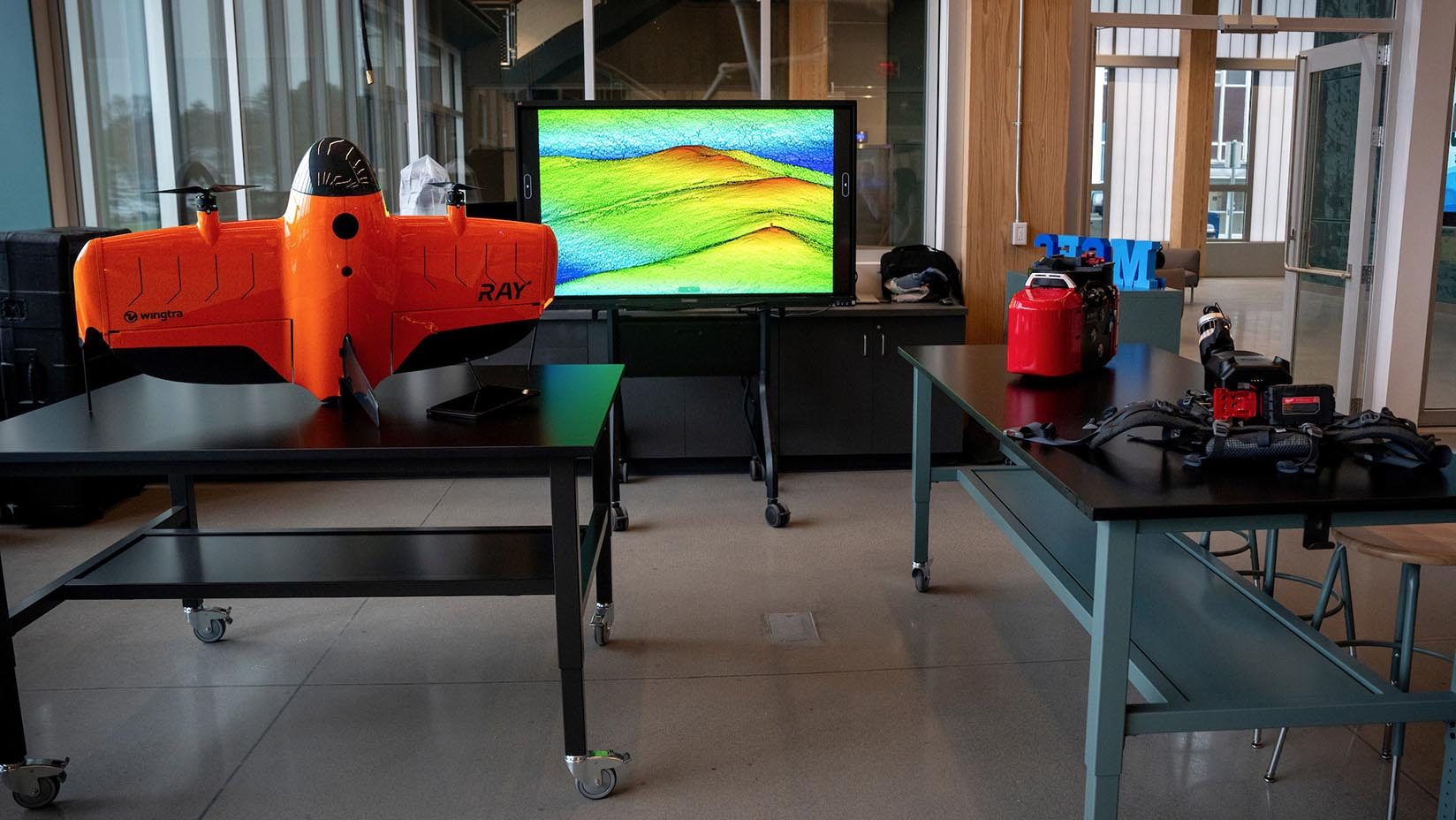
Researchers collected baseline measurements from the air and ground before the August 2025 harvest of a section of forest in central Maine. That included deploying a drone carrying laser mapping equipment to capture detailed, three-dimensional pictures.
The data will be compared with Northeast Wilderness Trust’s nearby Howland Forest Research Preserve that was not harvested to see how logging changes the forest’s growth and recovery.
The images show how height and structure change as trees grow.
Tree ring measurements from forest plots and more than 25 years of carbon dioxide measurements will contribute to the data.
$1M earmarked for the study
The U.S. Department of Energy awarded $997,575 for the project, with $259,139 disbursed to date. The goal of the study — led by Daniel Hayes, a UMaine professor of geospatial analysis and remote sensing — is to help forest managers better understand how harvesting affects the trees left behind and the next generation of growth. The research focuses on partial harvesting, a common practice in northern U.S. commercial forests that removes some trees while leaving others standing.

The four-year study will track remaining trees and seedlings and examine how leftover branches and wood break down, a process that releases nutrients that can help new trees grow. Researchers will also measure how much carbon dioxide the forest takes in and releases.
UMaine School of Forest Resources researchers Shawn Fraver, Xinyuan Wei, Aaron Weiskittel and Rose Abramoff will collaborate with Hayes and Oak Ridge National Laboratory on the project.
