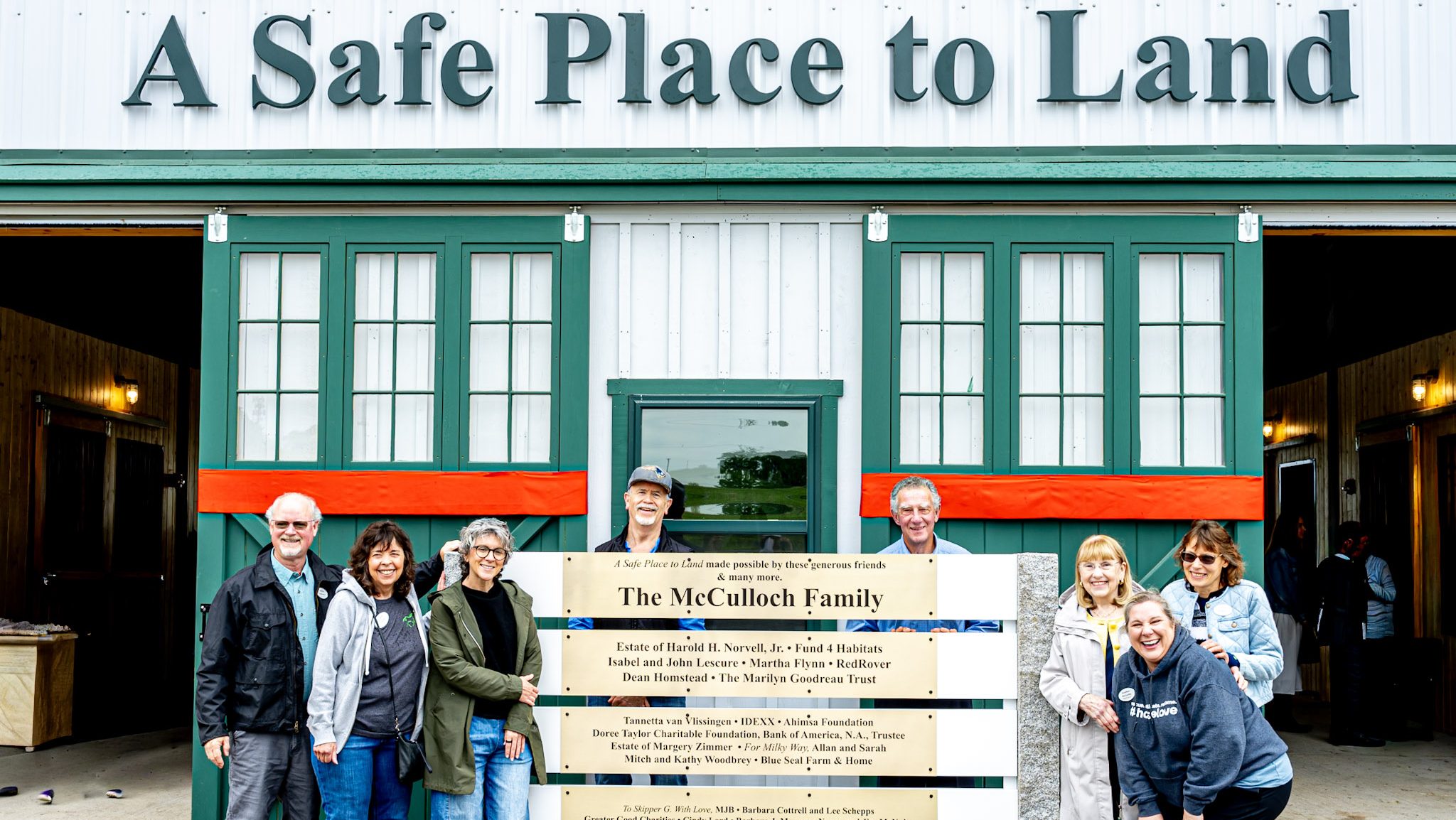
A nonprofit animal shelter that protects the health and welfare of abused and neglected equines added capacity with the completion of an eight-stall intake and quarantine barn and four connected paddocks.
The Maine State Society for the Protection of Animals, at 279 River Road in Windham, raised $1.5 million for the project and worked with J.M. Brown Construction in Hermon as the contractor, Shaw Brothers for site work and Main Line Fence Co. in Cumberland.
The barn broke ground in July 2025 and was mostly complete by early January, Peg Keyser, advancement director for the Maine State Society for the Protection of Animals, told Mainebiz. Fencing was fully completed by early spring. A ribbon-cutting was held late May.

Horse and donkey arrivals began once the barn and first paddock were finished.
The society previously averaged 30 to 35 horses on-site and now averages 45 to 50.
The barn is named for the Dave and Carol McCulloch family, which provided a matching gift of $500,000.
“It was huge community effort by hundreds of people,” Kerrie Leclair, the society’s executive director, said of the fundraiser.
Rehabilitation and rehoming
Originally formed in 1872, the society provides care to animals that have suffered abuse and promotes humane treatment, training and use of animals through education and hands-on experiences. It collaborates with other animal-serving agencies to maximize resources of all.
The organization is funded by donations, bequests, grants and fundraising. The society doesn’t charge for shelter services and seeks no reimbursement from any public source.
Horses are received from Maine law enforcement officials or surrendered society by owners.

The goal is rehabilitation and a new home. If no suitable adoption is found, horses may live out their natural lives at the farm. Horses receive veterinary and farrier care on-site.
Fragile health
The farm is 124 acres, about a third devoted to barns and buildings and the rest to hay fields, which provide a good portion of the hay used to feed the herd. The new construction is on a seven-acre corner of the farm.
The equines arrive in extremely fragile health, Keyser has said. Upon arrival, it’s essential they don’t have contact with the resident herd so as to protect the safety of the horses already in the society’s care.
Up to now, quarantine was provided by temporary fencing.
Quarantine protocols
The barn, just under 3,000 square feet, has eight stalls, a feed room, exam room, wash stall and utility room. Each stall provides access to one of the four paddocks.
“We’ve always been able to handle the same number of horses, but this allows us to make sure they’re getting the quarantine they need,” Leclair said. “It allows us to have specific protocols dedicated to that space.”
Many times, equines come to the society malnourished and very ill. The barn helps get them out of the elements, which aids their recovery.
Even with the new infrastructure, the need remains pressing, said Leclair.
“Horses are tucked away in backyards and down private dirt roads, so it’s really hard to know how bad the situation can be,” she said. “I don’t think it’s possible we could ever build enough that we could manage the horses in need in Maine. It continues to be an issue.”
The campus has around 15 full- and part-time employees and about 180 volunteers.
“They come in every day, every type of weather, muck stalls, help us maintain the property, so our staff can focus on the one-on-one care with the horses,” Leclair said o the volunteers.
The goal is to find the horses new homes, but that’s not always possible.
“We do our best,” she said. “We have one gentleman who has been here over 20 years and he’ll be here either until his natural death or until someone chooses him.”
Leclair said visitors are welcome to see the farm.
Safe shelter
The society also created a program called Safe Shelter, working with Red Rover Foundation and Greater Good Charities. Among their missions, the organizations work with domestic animals and their people in crisis.
“I attended a workshop with Red Rover and Greater Good and posed the idea of — what about horses?” said Keyser. “What if we created a program where we could house the horses of domestic violence survivors — while the survivor leaves the abusive situation and seeks to establish new residency?”
The society’s Safe Shelter program had one horse owned by a survivor of domestic violence who left the state, re-established residency and her horse was trailered to her. The farm currently has two domestic violence horses in residence.
“We are spreading the word, carefully and strategically, to domestic violence shelters and to the Maine Coalition to End Domestic Violence, to let them know this program exists,” said Keyser.
The society is developing a Safe Shelter Care and Feed Fund so that all expenses for the horses will be covered.
